
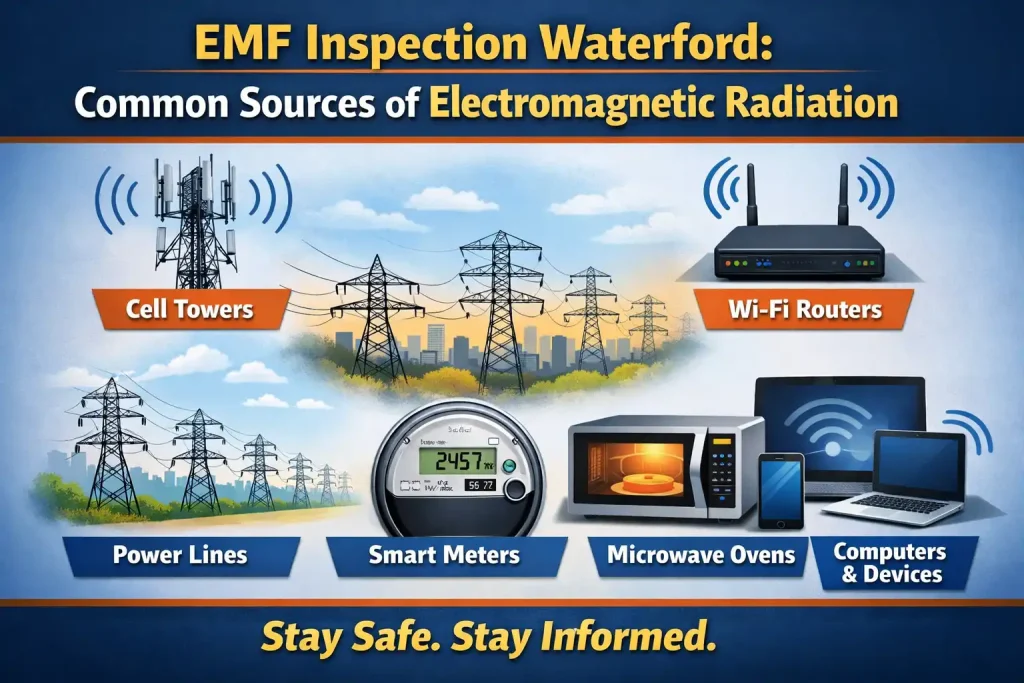
Electromagnetic radiation is an invisible part of modern life. From smartphones and Wi-Fi routers to power lines and household appliances, we are constantly surrounded by electromagnetic fields (EMFs). While many of these sources are considered safe within regulatory limits, growing public awareness has led homeowners, businesses, and institutions to seek a clearer understanding of their exposure. This is where emf inspection in Waterford plays a vital role, helping people identify, measure, and manage electromagnetic radiation in their environments.
In Waterford, interest in EMF inspections has grown alongside increased technology use and smart infrastructure. Parents want safer homes, employers want healthier workplaces, and property buyers want reassurance before investing. An EMF inspection provides data-driven insights rather than assumptions or fear-based conclusions. It helps answer practical questions: Where is EMF exposure highest? What devices contribute most? Are levels within accepted safety guidelines?
This article explores the most common sources of electromagnetic radiation found in homes, workplaces, and outdoor environments in Waterford. By understanding where EMFs come from and how they behave, readers can make informed decisions about mitigation, lifestyle adjustments, and professional assessments.
Understanding Electromagnetic Fields (EMFs)
Electromagnetic fields are areas of energy produced by electrically charged objects. They are generally divided into two categories: non-ionizing radiation and ionizing radiation. EMF inspections focus almost exclusively on non-ionizing radiation, which is emitted by everyday electrical and wireless technologies.
Non-ionizing EMFs include extremely low frequency (ELF) fields from power lines and appliances, as well as radiofrequency (RF) radiation from wireless communication devices. According to the World Health Organization, most household EMF exposures are far below international safety limits, yet long-term exposure patterns are still being studied.
An EMF inspection does not aim to alarm but to quantify. Using calibrated instruments, inspectors measure field strength, frequency ranges, and exposure duration. This data allows property owners to understand their environment objectively and compare results with established guidelines from bodies such as ICNIRP and the EU Council Recommendation.
Power Lines and Electrical Infrastructure
Overhead and Underground Power Lines
One of the most significant sources of low-frequency EMFs in residential areas is power transmission infrastructure. Overhead power lines generate electric and magnetic fields that can extend into nearby homes, especially those located directly beneath or adjacent to them. Underground cables, while less visible, can also contribute to background EMF levels.
In Ireland, the standard electricity supply operates at 50 Hz, a frequency associated with ELF magnetic fields. Studies suggest that magnetic field strength decreases rapidly with distance, meaning homes further from power lines experience significantly lower exposure. An inspection helps determine whether proximity is a practical concern or simply a perceived one.
Substations and Transformers
Electrical substations and local transformers are another source of low-frequency EMFs. These are often located near residential developments, commercial buildings, or apartment complexes. While typically compliant with safety standards, their presence can raise questions for occupants.
An EMF assessment near substations focuses on boundary measurements and indoor readings. The goal is to ensure that exposure levels remain well within accepted limits and to identify any unusual hotspots caused by wiring configurations or load imbalances.
Household Appliances and Wiring
Common Domestic Devices
Everyday appliances contribute to indoor EMF exposure, especially when used at close range. Items such as microwave ovens, induction hobs, hairdryers, and electric blankets produce measurable electromagnetic fields during operation. However, exposure drops sharply as distance increases.
For example, a hairdryer can emit relatively high magnetic fields within 20 centimeters, but levels fall dramatically beyond arm’s length. EMF inspections help residents understand safe usage habits rather than eliminate appliances entirely.
Faulty or Poorly Designed Wiring
Improper wiring, grounding issues, or older electrical installations can create elevated magnetic fields within walls and floors. These fields are often continuous, unlike appliance-related EMFs that occur only during use.
In some cases, inspections uncover wiring errors that not only increase EMF levels but also pose electrical safety risks. Correcting these issues can improve both electromagnetic exposure and overall electrical performance.
Wireless Technology and Smart Devices
Wi-Fi Routers and Mesh Networks
Wireless internet is now a necessity in most homes and offices. Wi-Fi routers emit radiofrequency radiation continuously, although typically at low power levels. The rise of mesh networks has increased the number of access points in a single building, potentially raising cumulative exposure.
An EMF inspection evaluates RF levels in different rooms, identifying areas with higher signal density. Simple changes, such as router placement or power settings, can often reduce unnecessary exposure without compromising connectivity.
Mobile Phones and Base Stations
Mobile phones are among the most studied sources of RF radiation. While individual devices emit low power, their close proximity to the body makes usage patterns important. Base stations and masts, on the other hand, emit higher power but are usually located at a distance.
Measurements around mobile phone masts consistently show exposure levels well below regulatory limits in residential areas. Inspections provide reassurance by translating technical data into understandable results for occupants.
Workplaces and Commercial Environments
Office Equipment and IT Infrastructure
Modern offices contain numerous EMF sources, including computers, monitors, servers, and uninterruptible power supplies. While individual devices may emit minimal fields, combined exposure in dense office layouts can be higher than expected.
Server rooms and data centers deserve particular attention due to concentrated electrical and RF equipment. Inspections in these environments help employers meet occupational health obligations and design safer workspaces.
Industrial and Medical Settings
Certain workplaces involve specialized equipment that generates stronger electromagnetic fields. Manufacturing machinery, welding equipment, and medical imaging devices such as MRI scanners produce high-intensity fields within controlled zones.
In these settings, EMF assessments are essential for compliance, risk management, and staff training. Clear signage, access controls, and exposure monitoring are often recommended based on inspection findings.
Outdoor and Environmental Sources
Transport and Communication Infrastructure
Railway systems, electric vehicle charging stations, and communication towers contribute to environmental EMFs. As Ireland expands its renewable energy and electric transport networks, these sources are becoming more common in urban and suburban landscapes.
Public exposure from such infrastructure is regulated and monitored, but local conditions can vary. An inspection provides site-specific data rather than relying on generalized assumptions.
Renewable Energy Installations
Solar inverters and wind turbine electrical systems can generate both low-frequency and radiofrequency fields. While typically low in residential exposure scenarios, proximity and installation quality matter.
Property owners near renewable installations may request EMF assessments to ensure compatibility with living or working environments. These inspections often confirm that exposure remains well within accepted guidelines.
Why EMF Awareness Matters
Awareness does not mean alarm. It means understanding how technology interacts with our living spaces and making informed choices. According to Eurostat data, over 90% of European households now have internet access, and smart device adoption continues to rise annually. This trend underscores the importance of informed EMF management.
An EMF inspection empowers individuals with knowledge. It replaces speculation with measurement and provides practical recommendations tailored to specific environments. For families, it can offer peace of mind. For businesses, it supports duty-of-care responsibilities. For property buyers, it adds another layer of due diligence.
Conclusion
Electromagnetic radiation is an unavoidable part of modern life, woven into the infrastructure and technologies we rely on daily. From power lines and household appliances to wireless networks and workplace equipment, EMF sources are diverse and often misunderstood. What matters most is not their presence but their intensity, duration, and proximity.
Professional EMF inspections provide clarity in a landscape often clouded by conflicting information. They identify real exposure levels, highlight any unusual conditions, and offer practical mitigation strategies when needed. In Waterford, growing awareness reflects a broader desire for healthier, more transparent living and working environments.
Whether you are a homeowner concerned about family well-being, a business owner managing workplace safety, or a property professional seeking added assurance, understanding EMFs is a proactive step. With accurate measurements and expert interpretation, emf survey services Waterford help bridge the gap between technology and peace of mind, ensuring that modern convenience and health-conscious living can coexist confidently.
Frequently Asked Questions:-
1. What is an EMF inspection, and why is it important?
- An EMF inspection is a professional assessment that measures electromagnetic fields in a home, workplace, or outdoor environment. It is important because it provides accurate data about EMF exposure levels, helping people understand whether they are within recommended safety guidelines and identify any unusually high sources.
2. Are EMFs in homes and offices dangerous?
- Most EMFs found in homes and offices are well below international safety limits. However, continuous exposure from certain sources, such as wiring issues or close-range device use, can raise concerns for some individuals. An inspection helps clarify actual exposure levels rather than relying on assumptions.
3. What are the most common sources of EMFs in residential properties?
- Common sources include household appliances, Wi-Fi routers, mobile phones, electrical wiring, nearby power lines, and smart devices. While these sources are part of everyday life, their EMF strength usually decreases significantly with distance.
4. How long does an EMF inspection usually take?
- A typical EMF inspection can take anywhere from one to three hours, depending on the size of the property and the complexity of the electrical and wireless environment. Larger homes or commercial spaces may require more detailed measurements.
5. Can EMF levels be reduced after an inspection?
- Yes, in many cases, EMF levels can be reduced through simple steps such as repositioning devices, improving wiring or grounding, adjusting usage habits, or upgrading equipment. An inspection report usually includes practical recommendations tailored to the specific property.