
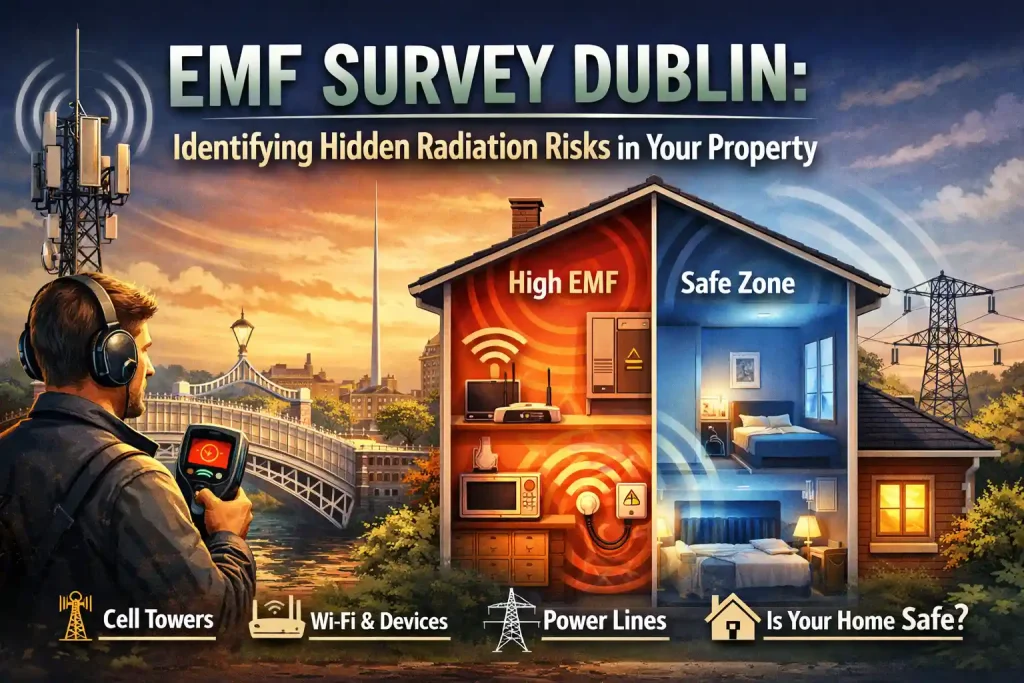
Have you ever wondered what invisible forces might be affecting your health right inside your own home? While we can’t see electromagnetic fields, they’re everywhere, radiating from our WiFi routers, smart meters, mobile phones, and even the electrical wiring behind our walls. For Dublin residents concerned about long-term exposure to electromagnetic radiation, conducting an emf survey in Dublin is becoming an essential step in creating healthier living spaces. Whether you’re experiencing unexplained headaches, sleep disturbances, or want peace of mind about your family’s wellbeing, understanding the electromagnetic environment in your property is more important than ever. The good news? Identifying these hidden radiation risks is entirely achievable with the right knowledge and professional support. This comprehensive guide will walk you through everything you need to know about EMF surveys, from understanding what they measure to taking actionable steps that protect your health.
What Exactly Is an EMF Survey and Why Does It Matter?
An electromagnetic field survey is a detailed assessment that measures radiation levels throughout your property. Think of it as a health check-up for your home’s electromagnetic environment. During this process, specialized equipment detects and quantifies both low-frequency fields from electrical appliances and high-frequency radiation from wireless devices.
But why should Dublin homeowners care? Recent studies have raised concerns about the potential health risks associated with prolonged exposure to EMF. While debates continue in the scientific community, many people report feeling noticeably better after reducing their exposure. Children, pregnant women, and individuals with electromagnetic hypersensitivity are particularly vulnerable.
The reality is that modern homes contain dozens of radiation sources. Your bedroom alone might house a WiFi router, charging smartphones, an electric alarm clock, and power outlets in the walls. Each contributes to your total exposure. An EMF survey provides concrete data, transforming vague concerns into measurable information you can actually address.
Common Sources of EMF Radiation in Dublin Homes
Dublin properties, like homes everywhere, harbor numerous electromagnetic radiation sources that most residents never consider. Your kitchen is typically a hotspot, with microwave ovens, refrigerators, electric cookers, and induction hobs all generating significant fields. Meanwhile, that smart meter recently installed by your utility provider continuously emits wireless signals to transmit usage data.
Living rooms present their own challenges. Large flat-screen televisions, gaming consoles, sound systems, and WiFi routers create a constant electromagnetic soup. Many families unknowingly position their sofas directly against walls containing heavy electrical wiring, exposing themselves to elevated magnetic fields during hours of relaxation.
Bedrooms deserve special attention since we spend roughly one-third of our lives sleeping. Electric blankets, digital alarm clocks positioned mere inches from your head, and mobile phones charging on nightstands can disrupt your body’s natural repair processes during sleep. Additionally, meter boxes and electrical panels located on bedroom walls significantly increase exposure levels.
Don’t overlook external sources either. Mobile phone masts, high-voltage power lines, and neighboring properties’ WiFi networks all contribute to your home’s total electromagnetic load. Understanding these sources is the first step toward meaningful reduction.
The EMF Survey Process: What to Expect
When you schedule an emf surveyin Dublin, knowing what happens helps you prepare effectively. Professional surveys typically begin with a detailed consultation where the assessor learns about your concerns, health symptoms, and property layout. This conversation guides the investigation toward your specific priorities.
The actual assessment involves systematically measuring electromagnetic fields room by room. Surveyors use calibrated meters to detect different frequency ranges—radiofrequency radiation from wireless devices, magnetic fields from electrical systems, and electric fields from wiring and appliances. They’ll check obvious sources, such as WiFi routers and computers, but also investigate hidden culprits, including wiring errors, underground cables, and external radiation that may be penetrating your walls.
Measurements are taken at various heights and positions throughout each room. Particular attention goes to areas where you spend extended periods—beds, desks, and favorite chairs. The surveyor documents readings, photographs problem areas, and notes potential sources contributing to elevated levels.
Following the site work, you’ll receive a comprehensive report detailing findings room by room. Good reports don’t just present numbers; they explain what measurements mean for your health and provide prioritized recommendations for reducing exposure. This roadmap transforms data into actionable improvements.
Health Concerns Driving EMF Survey Demand
More Dublin residents are requesting EMF surveys as awareness grows about potential health implications. While establishing definitive causal relationships remains challenging, numerous individuals report symptoms they attribute to electromagnetic exposure. Understanding these concerns helps explain why surveys matter.
Sleep disruption tops the list of reported issues. Many people notice improved sleep quality after reducing bedroom EMF levels, particularly when eliminating wireless devices and electrical sources near the bed. Chronic fatigue, another common complaint, sometimes improves when overall exposure decreases throughout the home.
Headaches and concentration difficulties frequently motivate survey requests, especially among home workers spending long hours near computers, routers, and other equipment. Parents often seek assessments out of concern for children’s developing systems, which may be more vulnerable to electromagnetic influences than adults.
Some individuals experience electromagnetic hypersensitivity, reporting acute reactions including skin sensations, dizziness, heart palpitations, and anxiety when near EMF sources. While medical consensus hasn’t fully recognized this condition, sufferers find relief through systematic exposure reduction guided by survey results.
Beyond immediate symptoms, long-term exposure concerns drive precautionary approaches. Many simply prefer minimizing unnecessary radiation exposure where practical, applying the “as low as reasonably achievable” principle to their living spaces.
Practical Steps to Reduce EMF Exposure at Home
Knowledge without action changes nothing. Fortunately, survey results enable targeted interventions that meaningfully reduce your electromagnetic exposure. Starting with bedrooms makes sense since sleep quality impacts overall health so profoundly.
Create a low-EMF bedroom sanctuary by removing all unnecessary electrical devices. Unplug alarm clocks or switch to battery-operated versions positioned at least three feet from your head. Charge phones in another room overnight, or at a minimum, enable airplane mode. If you must keep WiFi active, position the router as far from bedrooms as possible, or better yet, switch it off at night using an outlet timer.
Throughout your home, hardwire internet connections wherever feasible. Ethernet cables deliver faster, more reliable connectivity than WiFi while eliminating a major radiation source. Disable WiFi on devices that work fine with cables—desktop computers, printers, smart TVs, and gaming consoles.
Increase distance from EMF sources whenever possible. Position furniture away from walls containing heavy electrical wiring or meter boxes. Keep laptops off your lap, using a desk instead. Maintain distance from appliances while they’re operating—especially microwaves and induction cooktops.
Consider shielding solutions for unavoidable exposure situations. Special paints, fabrics, and films can reduce radiofrequency penetration from external sources like neighboring networks or mobile phone masts. However, implement shielding carefully to avoid inadvertently trapping radiation inside or creating new problems.
Choosing Professional Help: When DIY Isn’t Enough
While consumer EMF meters exist, professional assessments offer advantages that justify the investment. Experienced surveyors bring calibrated, professional-grade equipment that detects a wider spectrum of frequencies with greater accuracy than consumer devices. They also possess the expertise to interpret readings correctly, distinguishing between concerning levels and background radiation.
Professionals identify sources you’d likely miss—wiring errors creating unnecessary magnetic fields, unexpected radiation entering from external sources, or intermittent emissions from smart devices. Their trained eye spots patterns and connections that non-experts overlook.
Perhaps most valuably, professional reports provide credible documentation. If you’re dealing with landlord disputes about meter placement, negotiating with utility companies about smart meter alternatives, or building electromagnetic considerations into property purchases, professional assessments carry weight that DIY measurements simply don’t.
When selecting a surveyor, verify their qualifications and experience specifically with residential EMF assessments. Request sample reports to evaluate their thoroughness and clarity. Ask about the equipment they use and how they stay current with evolving technology. Good professionals educate clients throughout the process, empowering you to maintain a healthier environment long after the survey concludes.
Conclusion
Taking control of your electromagnetic environment doesn’t require paranoia, just awareness, measurement, and sensible precautions. An emf survey in Dublin provides the foundation for informed decisions about your family’s exposure levels. From identifying major radiation sources to implementing practical reduction strategies, you now have the knowledge to create healthier living spaces.
Remember, small changes accumulate into significant improvements. Start with your bedroom, where reducing exposure costs nothing but delivers immediate sleep quality benefits. Gradually extend low-EMF practices throughout your home as priorities and budgets allow. The electromagnetic landscape will continue evolving as technology advances, making periodic reassessments valuable for maintaining optimal environments.
If you’re ready to move beyond guesswork and obtain precise measurements tailored to your property, partnering with a certified emf specialist ensures you receive accurate assessments and actionable recommendations. Your health deserves the clarity that professional expertise provides. Take the first step today toward understanding and reducing the invisible radiation risks in your Dublin property.
Frequently Asked Questions:-
1. How long does an EMF survey typically take?
- A professional EMF survey for an average-sized home usually takes 2-4 hours, depending on property size and complexity. The surveyor needs time to measure each room thoroughly, identify radiation sources, and document findings. You’ll typically receive a detailed report within 5-7 days after the assessment.
2. What’s considered a safe EMF level in homes?
- While official standards vary by country, many health-conscious experts recommend keeping magnetic fields below 1 milligauss (mG) and electric fields under 10 V/m in sleeping areas. For radiofrequency radiation, levels below 0.1 μW/m² are considered optimal. Your surveyor will compare your readings against these precautionary guidelines.
3. Can I conduct an EMF survey myself?
- Yes, you can purchase consumer EMF meters (€100-€500) for basic measurements. However, professional equipment costs thousands and requires expertise to interpret correctly. DIY surveys work for general awareness, but professionals identify hidden sources and wiring issues you’d likely miss, making their assessments more thorough and actionable.
4. Will an EMF survey help if I have smart meters installed?
- Absolutely. A survey identifies exactly how much radiation your smart meter emits and whether it’s affecting your living spaces. The surveyor can measure transmission patterns, recommend optimal furniture placement away from the meter, and suggest shielding solutions if levels are concerning. Some readings help negotiate meter relocation with utility providers.
5. How often should I repeat an EMF survey?
- Most homes benefit from re-surveying every 3-5 years or after major changes like renovations, new appliances, upgraded electrical systems, or nearby mobile phone mast installations. If you’ve implemented reduction strategies, a follow-up survey within 6-12 months confirms your improvements are effective and identifies any remaining issues.