
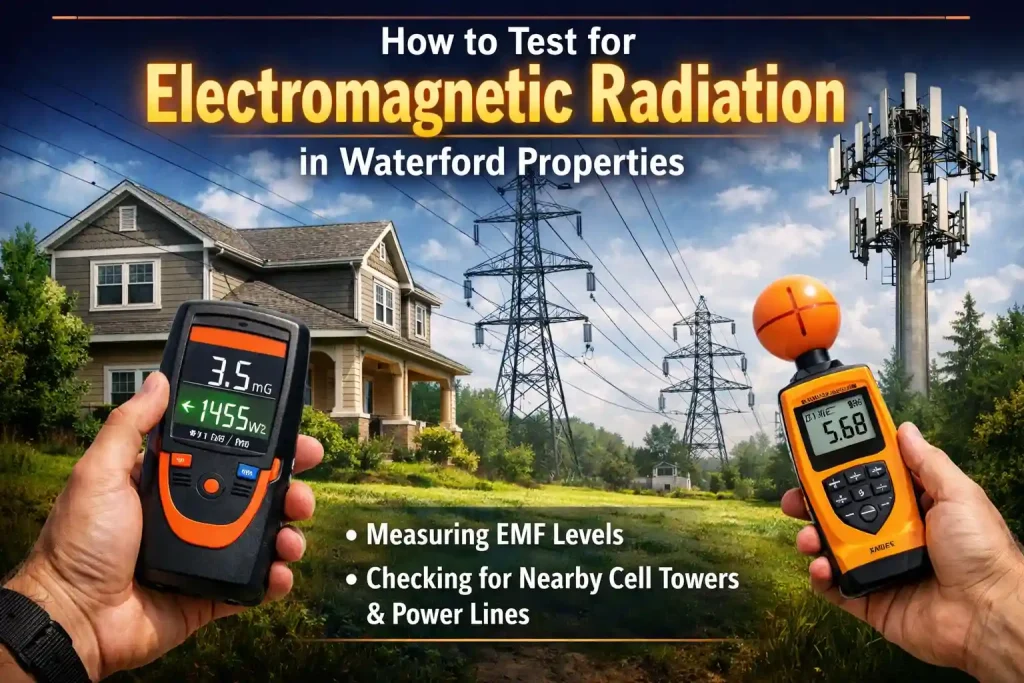
If you’ve ever wondered whether invisible electromagnetic fields are affecting your Waterford home, you’re not alone. More property owners across Ireland are becoming conscious of the electromagnetic radiation surrounding their living spaces, from WiFi routers and smart meters to nearby power lines and cell towers. Understanding how to properly test for electromagnetic radiation in Waterford properties is becoming an essential part of home wellness assessments, particularly as our homes become increasingly connected with technology. Whether you’re experiencing unexplained headaches, sleep disturbances, or simply want peace of mind about your family’s environment, testing for EMF exposure offers valuable insights. This comprehensive guide walks you through the practical steps, tools, and considerations for assessing electromagnetic radiation levels in your property, helping you make informed decisions about your indoor environment and take appropriate action if needed.
Understanding Electromagnetic Radiation in Irish Homes
Before diving into testing methods, it’s helpful to understand what we’re actually measuring. Electromagnetic radiation exists on a spectrum, ranging from extremely low frequency (ELF) fields generated by electrical wiring and appliances to radiofrequency (RF) radiation from wireless devices and telecommunications infrastructure. In Waterford properties, common sources include power lines along residential streets, electrical substations, mobile phone masts, and the growing number of smart home devices within our walls. Irish homes typically face lower ambient EMF levels compared to urban centers, yet localized hotspots can occur near electrical panels, under-floor heating systems, or in rooms with multiple wireless devices. The key distinction lies between ionizing radiation (like X-rays), which can damage DNA, and non-ionizing radiation from everyday sources, which operates at much lower energy levels but may still warrant monitoring for those concerned about prolonged exposure.
Essential Equipment for DIY EMF Testing
Getting started with electromagnetic radiation testing doesn’t require a massive investment. A basic EMF meter, available for €50-150 online, can measure magnetic fields from electrical sources in milligauss (mG) or microteslas (µT). For more comprehensive assessments, consider a trifield meter that measures electric fields, magnetic fields, and radiofrequency radiation in one device, typically costing €150-300. RF meters specifically detect wireless radiation from WiFi, mobile phones, and smart meters, with quality models starting around €100. When selecting equipment, look for devices with clear digital displays, frequency-weighted measurements, and peak-hold functions that capture maximum readings. Additionally, many professionals recommend keeping a simple notebook to record measurements room-by-room, noting time of day and nearby electrical devices. While smartphone apps claim to measure EMF levels, their accuracy remains questionable due to hardware limitations, making dedicated meters the more reliable choice for serious assessments.
Step-by-Step Testing Protocol for Waterford Properties
Begin your testing by creating a property map marking all electrical panels, major appliances, and known EMF sources. Start measurements in bedrooms where people spend extended time sleeping, as prolonged exposure during rest concerns many health-conscious homeowners. Hold your EMF meter at waist height and slowly walk around each room, paying special attention to areas near beds, desks, and seating areas. Record baseline readings with all devices turned off, then systematically activate electrical circuits, appliances, and wireless devices to identify specific contributors. For electromagnetic radiation, Waterford homeowners should particularly check near older wiring systems common in period properties, as degraded insulation can increase electric field emissions. Test at different times of day since EMF levels fluctuate with neighborhood electrical consumption and mobile network traffic. Don’t forget outdoor measurements near property boundaries, especially if power lines or transformers sit nearby. Document everything with photos, meter readings, and environmental notes—this creates a valuable reference for tracking changes over time or sharing with professionals.
Interpreting Your EMF Readings Against Safety Standards
Once you’ve collected measurements, understanding what the numbers mean is crucial. Ireland follows ICNIRP (International Commission on Non-Ionizing Radiation Protection) guidelines, which set exposure limits at 100 microteslas for magnetic fields and 5,000 V/m for electric fields from 50 Hz power sources. However, many building biologists recommend more precautionary targets: below 1 mG (0.1 µT) for sleeping areas and under 2.5 mG for general living spaces. For RF radiation, ICNIRP guidelines allow up to 10 W/m², but building biology standards suggest keeping levels below 0.1 µW/m² in bedrooms. Context matters tremendously—a brief spike when using a microwave differs significantly from constant elevated readings in a child’s bedroom. Compare your findings against both regulatory limits and precautionary targets to determine whether action is needed. Remember that standards continue evolving as research progresses, and some individuals report sensitivity at levels below official guidelines, making personal assessment equally important as regulatory compliance when evaluating your property’s electromagnetic environment.
Common High-EMF Zones and Mitigation Strategies
Testing typically reveals predictable hotspots throughout Waterford homes. Electrical panels often generate the strongest magnetic fields, sometimes extending several feet into adjacent rooms—consider moving beds or desks away from these areas. Kitchen appliances, particularly induction cooktops and microwave ovens, create intense but localized fields that dissipate quickly with distance. Home offices present unique challenges with WiFi routers, computer equipment, and charging stations clustering together; simple solutions include using ethernet cables, powering down devices when not in use, and maintaining distance from equipment. Baby monitors, while essential for safety, often emit continuous RF radiation—opt for lower-frequency analog models or use audio-only monitors when possible. Bedrooms deserve special attention since we spend roughly one-third of our lives sleeping; switching bedroom circuits off at night using demand switches, keeping phones in airplane mode, and maintaining distance from alarm clocks can significantly reduce overnight exposure. For persistent issues near external sources like power lines, shielding solutions exist, including specialized paints, window films, and bed canopies, though professional guidance ensures proper application.
When to Call a Professional EMF Inspector
While DIY testing provides valuable insights, certain situations warrant professional assessment. If preliminary measurements reveal consistently elevated readings but you can’t identify the source, experienced inspectors bring advanced equipment capable of pinpointing problems. Properties with unexplained electrical issues, such as flickering lights or tingling sensations when touching fixtures, may harbor wiring faults that create excessive electromagnetic fields requiring professional diagnosis. When purchasing a home, particularly older properties in Waterford’s historic districts, a pre-purchase EMF survey protects your investment by identifying potential issues before completion. Individuals experiencing persistent health symptoms potentially linked to EMF exposure benefit from comprehensive professional assessments that document exposure patterns and recommend targeted solutions. Professional inspectors also measure transient phenomena that your basic meter might miss, including dirty electricity (high-frequency voltage spikes) traveling through wiring and intermittent RF bursts from smart meters. Their detailed reports provide documentation useful for discussions with utility companies, landlords, or healthcare providers regarding necessary modifications.
Conclusion
Testing for electromagnetic radiation in Waterford properties empowers homeowners with knowledge about their living environment and practical steps toward reducing unwanted exposure. From understanding basic measurement principles to conducting systematic property surveys, you now have the framework for assessing EMF levels in your home. Remember that testing is just the first step—interpreting results, implementing strategic changes, and occasionally retesting ensure your living space supports your family’s wellbeing. Whether you choose the DIY approach or decide professional assessment better suits your needs, taking action demonstrates a proactive commitment to creating healthier indoor environments. For comprehensive evaluations conducted by a certified emf specialist who understands the unique characteristics of Irish properties, consider reaching out to EMF Inspections Munster. Their expertise helps Waterford residents navigate electromagnetic concerns with confidence, providing detailed reports and actionable recommendations tailored to your specific property. Don’t let uncertainty about invisible fields compromise your peace of mind—take control of your home’s electromagnetic environment today.
Frequently Asked Questions:-
1. What’s the difference between EMF meters and RF meters—do I need both?
- EMF meters measure low-frequency fields from electrical wiring and appliances (50-60 Hz), while RF meters detect wireless radiation from WiFi, phones, and cell towers. For a complete property assessment, you need both capabilities. Trifield meters offer both functions in one device, making them ideal for homeowners. If choosing just one, pick an EMF meter for electrical concerns or an RF meter for wireless device worries. Quality basic meters start around €50-100, while comprehensive trifield options cost €150-300.
2. Are the EMF levels in older Waterford properties typically higher than in newer builds?
- It varies. Older properties may have deteriorated wiring that increases electric fields, but they typically contain fewer electronic devices and wireless systems. Newer homes have modern wiring but far more EMF sources—smart meters, under-floor heating, extensive WiFi networks, and connected appliances. Older stone buildings also provide better natural shielding against external RF sources than modern timber-frame construction. The actual levels depend more on the specific property’s electrical setup and device usage than age alone.
3. How often should I retest my home for electromagnetic radiation?
- Annual testing is sufficient for most homes with normal readings. However, retest immediately after major electrical changes, new utility installations nearby (smart meters, transformers, cell towers), or when implementing mitigation measures. Families with young children, pregnant women, or sensitive individuals may prefer testing every six months. Always test when moving into a new property or after landlords make electrical modifications. Keep records to track trends over time.
4. Can EMF testing help identify specific electrical problems in my Waterford home?
- Yes. Unusually high readings often reveal wiring errors like reversed polarity, missing neutral connections, or current flowing through pipes. Elevated measurements may indicate damaged insulation, loose connections, or faulty grounding. Intermittent spikes can point to arcing problems or failing appliances needing immediate electrician attention. While EMF meters aren’t diagnostic tools, abnormal readings provide valuable clues about potential electrical hazards worth investigating professionally.
5. Will testing show whether my neighbour’s WiFi or electronics are affecting my home?
- Yes. RF meters detect wireless signals from neighboring properties, including WiFi networks and smart devices. You’ll see elevated readings near shared walls, especially in terraced homes or apartments. However, pinpointing exact sources is difficult without specialized equipment. Neighbors’ signals typically measure lower than your own devices due to distance and walls. Focus on positioning beds away from shared walls rather than trying to control neighbors’ equipment—RF radiation decreases rapidly with distance.