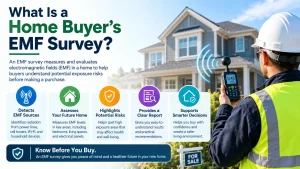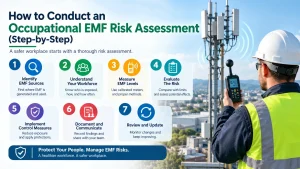
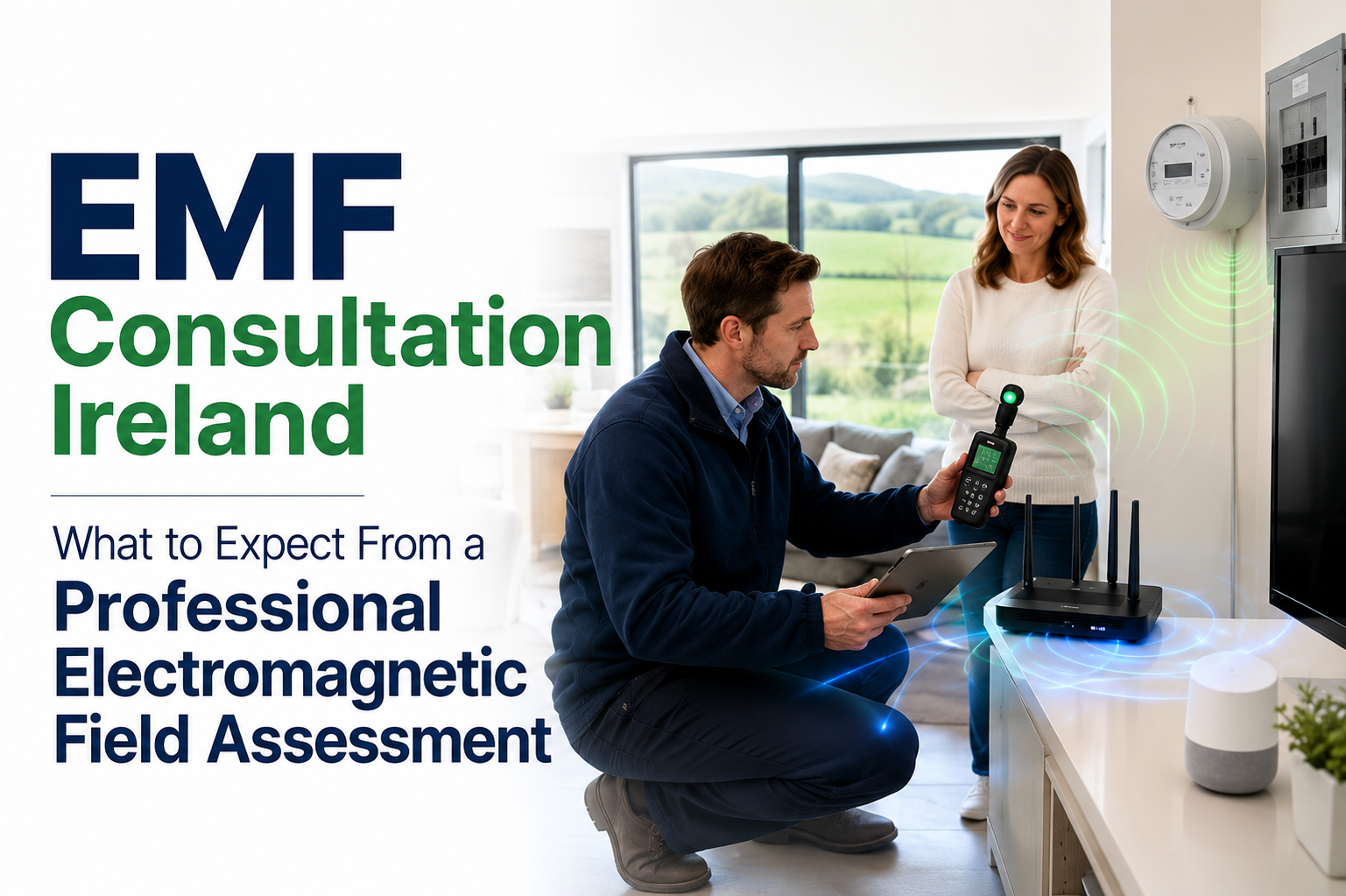
An EMF consultation checks the electromagnetic field levels in your home or workplace. A qualified assessor visits your property, takes measurements, and tells you if exposure levels are safe. This guide explains exactly what happens during a professional assessment and why it matters.
What Is a Professional Electromagnetic Field Assessment
Electromagnetic fields come from everyday sources. Power lines, mobile masts, Wi-Fi routers, and smart meters all give off some level of radiation. Most of it is harmless. But some people want to know their actual exposure, especially if they live close to a substation or a telecom mast.
A professional assessment involves trained technicians using calibrated meters. They measure both electric and magnetic fields, along with radiofrequency radiation from wireless devices. The goal is simple: give you clear, accurate numbers instead of guesswork.
This is different from buying a cheap EMF meter online. Consumer devices are often inaccurate. A trained assessor knows where to measure, how long to measure, and how to interpret the results against recognised safety guidelines.
Benefits of Getting an Assessment Done
Getting your property checked brings real, practical advantages.
Peace of mind. You get facts instead of assumptions. Many people worry about invisible radiation without any real data to back up their concerns.
Early problem detection. Faulty wiring or poorly shielded equipment can raise field levels unexpectedly. An assessment catches this before it becomes a bigger issue.
Better property decisions. If you’re buying or renting a home near power infrastructure, a report gives you solid information before you commit.
Workplace compliance. Employers have a duty to manage occupational exposure. A professional report helps meet health and safety obligations.
Custom reduction advice. If levels are higher than expected, the assessor can suggest practical fixes, such as rearranging furniture, adjusting router placement, or adding shielding materials.
Common Problems People Face Without an Assessment
Skipping a proper check can lead to a few issues.
- Relying on unreliable online meters that give false readings
- Making costly changes to a property based on guesswork
- Ongoing anxiety about exposure with no clear answers
- Missing workplace safety requirements
- Overlooking simple fixes that could lower exposure
The Assessment Process Step by Step

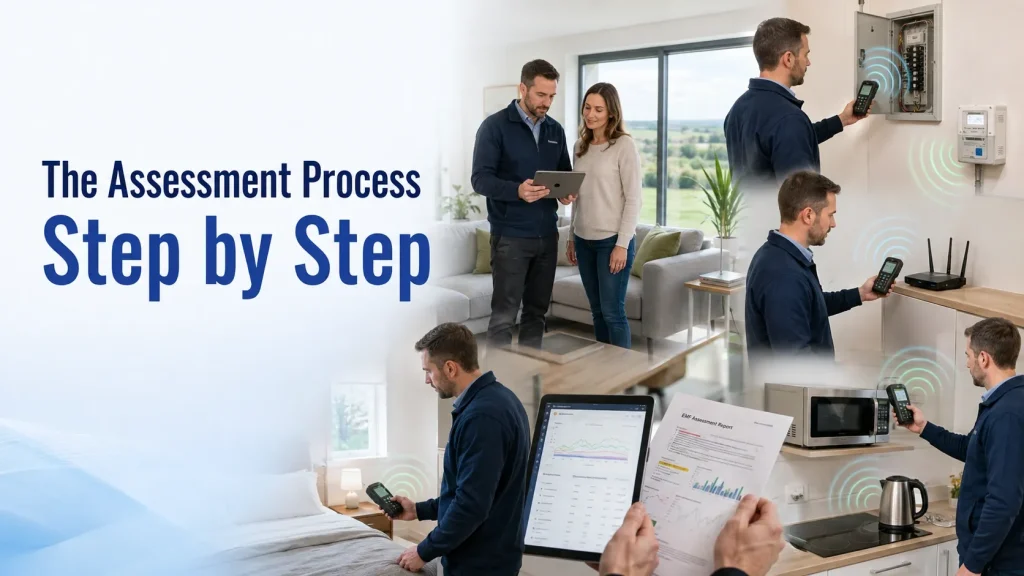
Here’s what typically happens during a visit.
Step 1: Initial consultation. The assessor asks about your concerns, the property layout, and nearby sources of EMF such as masts or substations.
Step 2: On-site measurement. Using calibrated equipment, the technician measures fields room by room. This includes bedrooms, living areas, and any spaces where you spend long hours.
Step 3: Source identification. The assessor identifies where the readings are coming from, whether it’s external infrastructure or internal wiring and appliances.
Step 4: Data comparison. Results are compared against internationally recognised exposure guidelines, such as those from ICNIRP.
Step 5: Report and recommendations. You receive a written report with clear findings and, if needed, practical steps to reduce exposure.
Most home visits take between one and two hours, depending on property size.
Cost Details
Pricing varies based on property size, location, and the depth of the assessment.
- Basic residential assessment: Usually covers a standard home visit with a written summary report.
- Detailed residential assessment: Includes room-by-room measurement, source mapping, and a full written report with reduction advice.
- Commercial or workplace assessment: Priced higher due to larger spaces and more detailed compliance reporting.
- Follow-up visits: Often available at a reduced rate if changes were made based on the first report.
Exact pricing depends on the provider and the scope of work. It’s best to request a quote based on your specific property and needs.
Who Is It Best For
This service suits a wide range of people.
- Homeowners near power lines, substations, or telecom masts
- Parents concerned about children’s bedrooms
- People planning to buy or rent a new property
- Employers managing workplace safety
- Anyone experiencing unexplained symptoms who wants to rule out environmental factors
- Landlords preparing a property for tenants
If any of these apply to you, booking a professional EMF consultation Ireland wide gives you clarity instead of uncertainty.
FAQs
What does an EMF assessment measure? It measures electric fields, magnetic fields, and radiofrequency radiation from sources like power lines, masts, and household devices.
How long does a home assessment take? Most residential visits take one to two hours, depending on the size of the property.
Is EMF exposure regulated in Ireland? Telecom emissions are monitored by ComReg, and workplace exposure falls under health and safety regulations enforced by the HSA.
Can I test EMF levels myself? You can buy consumer meters, but they’re often inaccurate. A professional assessment gives more reliable, actionable results.
Will the assessor tell me how to lower exposure? Yes. Most reports include practical recommendations, such as repositioning equipment or adding shielding where needed.
Do I need an assessment before buying a house? It’s a smart step if the property is near power infrastructure or a telecom mast, giving you facts before you commit.
Conclusion
A professional electromagnetic field assessment replaces guesswork with real data. Whether you’re concerned about your home, planning a property purchase, or managing workplace safety, a clear report gives you the answers you need.
Don’t leave your exposure levels to chance. Contact us today to book your professional EMF assessment and get accurate, actionable results for your property.