An occupational EMF risk assessment helps employers find and control electromagnetic field exposure at work. It protects employees and keeps businesses compliant with safety standards. This guide breaks the process into simple, actionable steps.
Table of Contents
ToggleWhat Is an Occupational EMF Risk Assessment
This is a structured process used to identify, measure, and manage electromagnetic field exposure in a workplace. It checks equipment, work areas, and job roles for potential EMF hazards.
The goal is simple. Find risks before they cause harm.
Industries like healthcare, telecom, manufacturing, and power generation rely on this process the most. Workers in these fields often work near machines, transmitters, or high-voltage systems that emit EMF.
A proper assessment does three things:
- Identifies EMF sources
- Measures exposure levels
- Suggests safety improvements, including better EMF Protection for staff
This is not a one-time task. It should be reviewed regularly as equipment or workspaces change.
Benefits of an Occupational EMF Risk Assessment
A workplace EMF check offers more than just compliance. Here are the real benefits.
1. Protects Employee Health
Long-term exposure to high EMF levels may affect health. Regular checks reduce this risk.
2. Builds Legal Compliance
Many countries require workplace safety checks. This includes electromagnetic field exposure limits set by health authorities.
3. Reduces Equipment-Related Risks
Some machines emit more EMF than expected due to faults or poor design. Assessments catch these issues early.
4. Improves Workplace Trust
Employees feel safer when they know their workplace actively monitors hazards.
5. Prevents Legal and Financial Issues
Non-compliance can lead to fines, lawsuits, or shutdowns. A proactive assessment avoids this.
6. Supports Better EMF Protection Planning
The assessment data helps companies choose the right shielding, distance controls, or equipment upgrades.
Common Problems Without Proper EMF Assessment
Skipping this process creates real risks:
- Unknown exposure levels
- Non-compliance with safety laws
- Increased health complaints from staff
- Equipment operating beyond safe emission limits
- Higher liability risk for the company
Ignoring EMF safety is not a small oversight. It can lead to long-term damage, both to health and to business reputation.
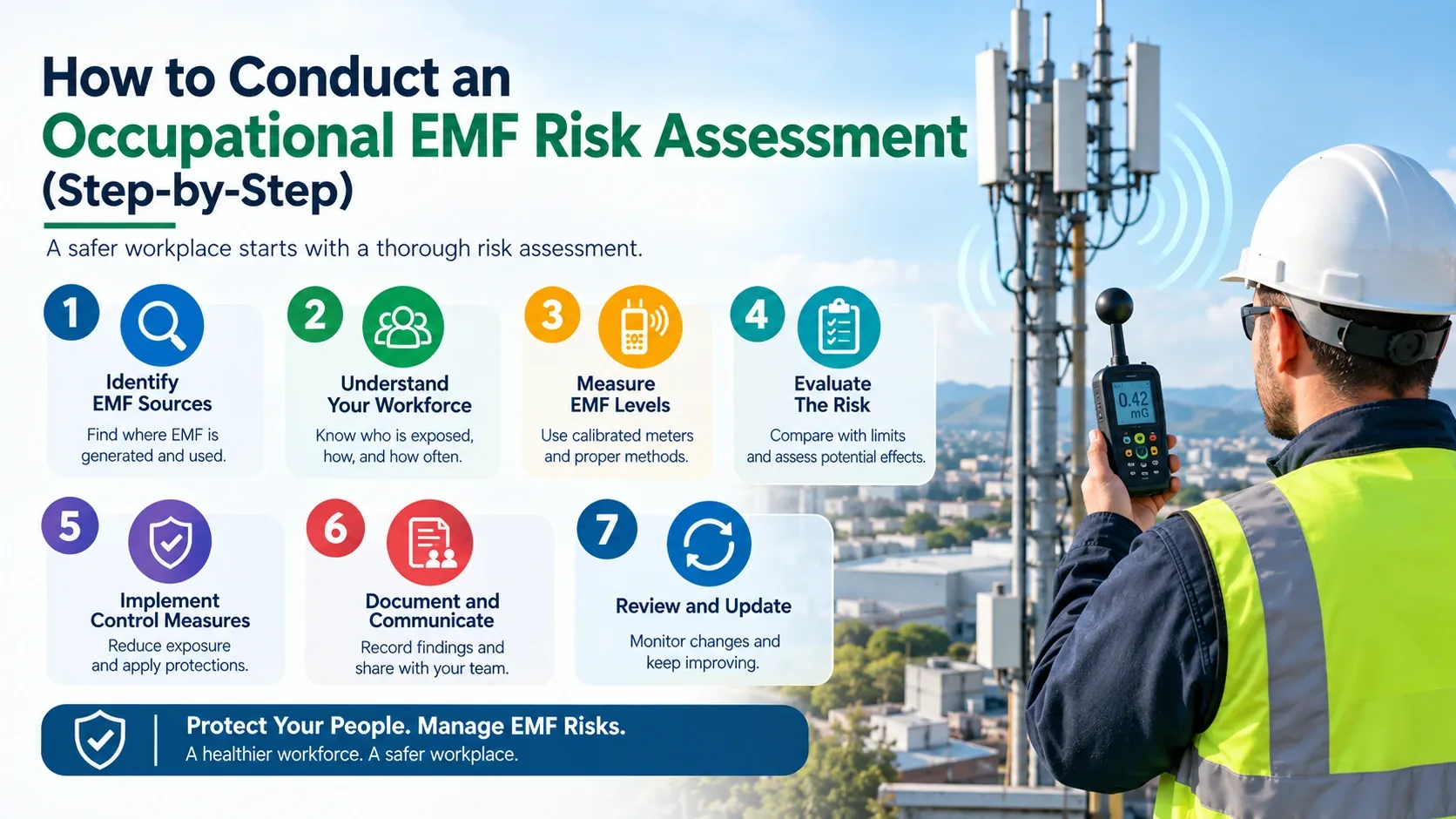
Step-by-Step Process to Conduct an Occupational EMF Risk Assessment
Here is the full process broken into clear steps.
Step 1: Identify EMF Sources
Start by listing all equipment and areas that generate electromagnetic fields. This includes:
- Power lines
- Industrial machinery
- Medical devices like MRI machines
- Telecom transmitters
- Wireless communication systems
Step 2: Classify Worker Exposure Levels
Not all employees face the same risk. Group workers based on:
- Distance from EMF sources
- Duration of exposure
- Type of equipment they operate
Step 3: Measure EMF Levels
Use certified EMF meters to record exposure data. Measurements should follow recognized standards such as ICNIRP or IEEE guidelines.
Accurate measurement is the core of any occupational EMF risk assessment. Skipping this step weakens the entire process.
Step 4: Compare Results With Safety Limits
Once data is collected, compare it with legal exposure limits. This shows whether the workplace is within safe boundaries.
Step 5: Identify High-Risk Zones
Mark areas where exposure levels are close to or above safety limits. These zones need immediate attention.
Step 6: Recommend Control Measures
Based on findings, suggest solutions such as:
- Increasing distance from EMF sources
- Using shielding materials
- Limiting exposure time
- Upgrading old equipment
- Applying better EMF Protection methods for at-risk employees
Step 7: Document the Assessment
Create a clear report with findings, risk levels, and recommended actions. This report supports legal compliance and future reviews.
Step 8: Review Regularly
EMF risk is not static. New equipment, layout changes, or technology upgrades can shift exposure levels. Schedule assessments periodically, not just once.
Cost Details of an Occupational EMF Risk Assessment
Costs vary based on business size, industry, and number of measurement points.
Typical Cost Factors
- Small businesses: Lower cost, fewer measurement points, shorter assessment time.
- Medium to large industries: Higher cost due to multiple departments and equipment types.
- Specialized sectors (healthcare, telecom, power plants): Cost increases due to complex machinery and stricter safety standards.
General Price Range
While pricing depends on location and provider, most assessments include:
- Site visit and equipment setup
- EMF measurement and data analysis
- Detailed compliance report
- Consultation for safety improvements
Investing in a proper risk assessment is usually far cheaper than dealing with legal penalties or health-related claims later.
Who Is This Assessment Best For
This process is essential for:
- Companies operating heavy machinery
- Telecom and network infrastructure providers
- Hospitals and diagnostic centers using MRI or diathermy equipment
- Power plants and electrical substations
- Manufacturing units with automated systems
- Any workplace with employees near high-voltage equipment
If your business falls into any of these categories, a professional EMF assessment should be a priority, not an afterthought.
FAQs
Q1: What is an occupational EMF risk assessment? It is a process used to identify and measure electromagnetic field exposure in a workplace to ensure employee safety.
Q2: How often should EMF assessments be done? Ideally, once a year or whenever new equipment or major workplace changes occur.
Q3: Is EMF exposure dangerous for employees? High or prolonged exposure may pose health risks, which is why regular assessments are important.
Q4: What tools are used to measure EMF levels? Certified EMF meters that follow ICNIRP or IEEE measurement standards.
Q5: Is this assessment legally required? In many countries, yes. Workplace safety laws often require EMF exposure monitoring.
Q6: How much does an EMF risk assessment cost? Cost depends on business size and industry, but it is generally affordable compared to potential compliance penalties.
Conclusion
An occupational EMF risk assessment is not just a compliance requirement. It is a practical step toward a safer, healthier workplace. From identifying EMF sources to applying the right EMF Protection measures, each step plays a role in reducing risk.
If your workplace has not been assessed recently, now is the right time to act.
Contact us today to schedule a professional EMF risk assessment and protect your team with confidence.